Electrotherapy may be included when clinically appropriate to support pain relief, muscle activation and rehabilitation. At Rehab Care Physiotherapy Clinic in Janakpuri, appropriate electrotherapy modalities may be combined with exercise, manual therapy and other physiotherapy approaches according to individual assessment.
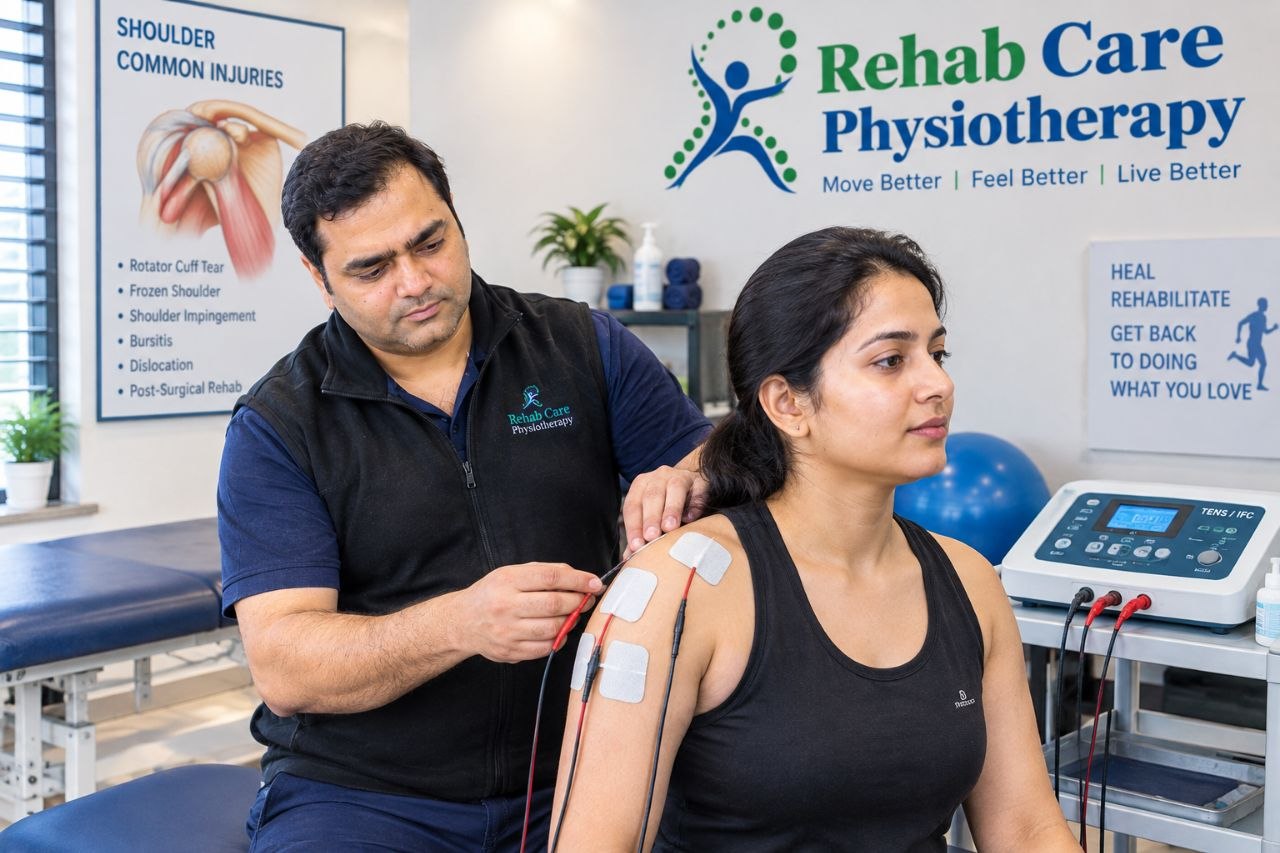
Electrotherapy refers to the use of selected electrical, thermal or sound-based modalities as part of physiotherapy treatment. These modalities may be used to support pain management, muscle activation, circulation-related comfort and rehabilitation when considered appropriate.
Common physiotherapy modalities include TENS, ultrasound therapy, electrical muscle stimulation and therapeutic heat or cold applications. The choice of modality depends on the individual's symptoms, medical history, treatment goals and clinical assessment.
Electrotherapy is generally used as one component of a wider physiotherapy plan. Depending on the condition, treatment may also include therapeutic exercise, mobility work, manual therapy, posture education and functional rehabilitation.
Not every electrotherapy modality is suitable for every person. A physiotherapist can determine whether a particular modality is appropriate based on the individual's condition and relevant precautions.
Depending on assessment, electrotherapy may form part of physiotherapy rehabilitation for different pain, muscle and movement-related concerns.
Selected modalities such as TENS may be considered as part of a physiotherapy plan to support pain management when clinically appropriate.
Ultrasound therapy may be considered in selected physiotherapy situations as an adjunct to other treatment approaches.
Electrical muscle stimulation may be used in selected cases to support muscle activation as part of a broader rehabilitation program.
Therapeutic heat may be used when appropriate to provide warmth and comfort before or alongside other physiotherapy interventions.
Cold applications may be considered in selected situations as part of symptom management and rehabilitation.
Appropriate modalities can sometimes be combined with active exercise, mobility training and functional rehabilitation.
Different modalities have different applications and should be selected according to the individual's clinical requirements.
The purpose of electrotherapy is to complement the overall physiotherapy program rather than replace active rehabilitation.
TENS uses controlled electrical stimulation through surface electrodes. It may be used as part of a pain-management strategy when considered appropriate after assessment.
Therapeutic ultrasound uses sound waves and may be included in selected physiotherapy treatment plans. Its use depends on the condition and clinical reasoning.
Electrical muscle stimulation can be used in selected cases to assist muscle activation. It is generally considered as one component of a broader rehabilitation program.
Heat therapy may provide warmth and temporary comfort and may be used before exercise or other treatment when clinically appropriate.
Cold therapy may be used in selected situations as part of symptom management. Appropriate application depends on the individual's condition and tolerance.
Electrotherapy can be combined with exercise, manual therapy, stretching, mobility work and functional rehabilitation when appropriate.
Electrotherapy may provide supportive treatment while the main rehabilitation program addresses movement and functional goals.
Physiotherapy is often focused on active rehabilitation. However, certain modalities may be used alongside exercise and other treatment techniques to help manage symptoms and make participation in rehabilitation more comfortable.
For example, TENS may be considered for pain management, while electrical muscle stimulation may be considered in selected situations where muscle activation is part of the rehabilitation goal.
The use of ultrasound, heat, cold or other modalities depends on the individual assessment and the clinical purpose of treatment.
Depending on the condition, physiotherapy may combine electrotherapy with therapeutic exercise, manual therapy, posture correction and functional movement training.

Long-term rehabilitation may require active participation outside the clinic as well as in-clinic treatment.
Appropriate strengthening, mobility, flexibility or functional exercises may be prescribed to support active rehabilitation.
Practicing appropriate movement patterns can help connect clinic-based treatment with everyday functional activities.
A personalized home program may be provided where appropriate to continue selected rehabilitation activities between appointments.
Symptom management is only one part of rehabilitation. Treatment can also focus on restoring useful movement and physical function.
Physiotherapy may include exercises and movement training alongside appropriate modalities to support functional mobility.
Where appropriate, electrical muscle stimulation may be combined with strengthening exercises to support active rehabilitation.
Mobility exercises and other physiotherapy techniques may be included to work on restricted or uncomfortable movement.
Rehabilitation may progress toward practical activities such as walking, reaching, sitting, standing and other everyday movements.
Education and gradual activity progression can help people understand how to safely return to appropriate movement.
Exercise and functional activities can be progressed as appropriate according to individual response and goals.
Electrotherapy is not appropriate for everyone, so clinical assessment and appropriate precautions are important.
A physiotherapist should consider the person's medical history, symptoms, treatment goals and relevant contraindications before selecting an electrotherapy modality.
Electrical stimulation should not be applied casually or without professional guidance, particularly when a person has implanted electrical devices, certain medical conditions, reduced sensation or other relevant risk factors.
Sudden severe pain, major trauma, unexplained weakness, new neurological symptoms, chest symptoms, fainting or other concerning changes require appropriate medical evaluation rather than relying only on electrotherapy.
Electrotherapy may be considered for selected individuals when a physiotherapist determines that a particular modality is appropriate.
Selected modalities such as TENS may be considered as part of an individualized approach to managing pain.
Electrical muscle stimulation may be considered in selected rehabilitation programs where muscle activation is a goal.
Individuals undergoing physiotherapy may have modalities incorporated into their treatment plan when clinically appropriate.
Rehab Care Physiotherapy Clinic provides physiotherapy and rehabilitation services in Janakpuri, New Delhi, including clinically appropriate electrotherapy modalities as part of individualized treatment plans.
If you are searching for electrotherapy in Janakpuri, electrotherapy physiotherapy Janakpuri, TENS therapy Janakpuri, ultrasound therapy Janakpuri, electrical muscle stimulation Janakpuri, heat therapy Janakpuri or cold therapy Janakpuri, a physiotherapy assessment can help determine which treatment options may be suitable for you.
Electrotherapy may also be considered alongside therapeutic exercise, manual therapy and functional rehabilitation for people looking for physiotherapy modalities in Janakpuri or electrotherapy near Janakpuri.
The clinic is also accessible for people searching for physiotherapy in Vikaspuri, physiotherapy in Uttam Nagar, physiotherapy in Tilak Nagar, physiotherapy in Hari Nagar, physiotherapy in Paschim Vihar and physiotherapy in Dwarka.
For people looking for electrotherapy in West Delhi, the treatment plan can be discussed with the physiotherapist after an appropriate assessment.
Clinic Address:
A4C/103, Ground Floor Janakpuri, market, opposite posangipur,
New Delhi, Delhi 110058
Common questions about electrotherapy and physiotherapy modalities.
Electrotherapy refers to selected therapeutic modalities that may use electrical stimulation, sound waves, heat or cold as part of physiotherapy treatment when clinically appropriate.
TENS stands for Transcutaneous Electrical Nerve Stimulation. It uses controlled electrical stimulation through surface electrodes and may be used as part of a pain-management approach.
Therapeutic ultrasound uses sound waves and may be included in selected physiotherapy treatment plans as an adjunct to other rehabilitation approaches.
Electrical muscle stimulation may be used in selected cases to support muscle activation. Suitability depends on the individual's condition and clinical assessment.
Electrotherapy is often used as one component of a broader physiotherapy program. Depending on the condition, treatment may also include therapeutic exercise, manual therapy, mobility work, education and functional rehabilitation.
Rehab Care Physiotherapy Clinic in Janakpuri, New Delhi, provides individualized physiotherapy treatment and may include clinically appropriate electrotherapy modalities after assessment.
Contact Rehab Care Physiotherapy Clinic to discuss your symptoms and rehabilitation requirements and find out whether electrotherapy may be appropriate as part of your physiotherapy treatment plan.
Contact Rehab Care Physiotherapy Clinic